

When temperatures drop, many ATV owners face the same problem: the battery suddenly weakens, loses power, or fails completely. While this may seem like an unpredictable winter nuisance, it is almost always the result of a combination of physics, maintenance, and inadequate riding habits.
In this guide, you will find clear explanations, proven solutions, and concrete preventive steps that can save you time, nerves, and money – and ensure your ATV starts even in the bitterest cold.
Why does the battery lose power in winter?
1. Low temperatures slow down battery chemistryIn cold weather, electrochemical reactions in lead-acid and lithium batteries slow down. Consequences:
- lower starting power,
- up to 30–50% less usable capacity,
- increased internal resistance → faster discharge.
2. Battery self-discharge while idle
Even when idle, the battery discharges. If it's old, partially discharged, or exposed to cold, this happens even faster. This is especially pronounced with lead-acid batteries.
3. Short rides = insufficient charging
Many use their ATV for shorter distances in winter. This means the alternator doesn't have enough time to replace the energy consumed when starting the engine.
4. Contact oxidation and loose cables
Cold, moisture, and salt cause oxidation, which increases resistance in the electrical system. A weak connection = a weak start.
Most common signs that your ATV has battery problems
- slow cranking,
- “click-click” when attempting to start,
- electronics turning off when starting,
- noticeably less powerful power steering, winch, or lights,
- battery losing voltage while idle.
If any of this happens regularly, the battery isn't "a little weak" – it's already at a stage where you need to reset or replace it.
How to prevent battery problems in winter?
1. Use a smart charger (mandatory!)
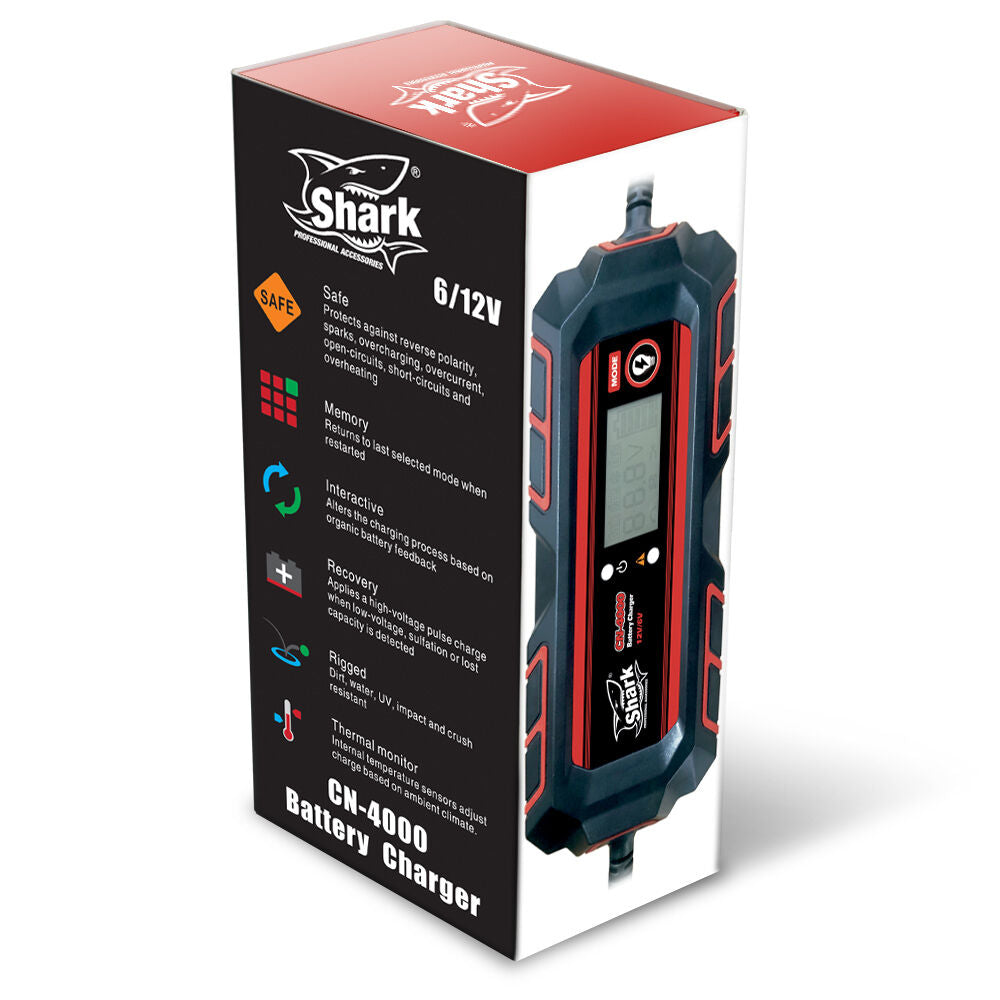
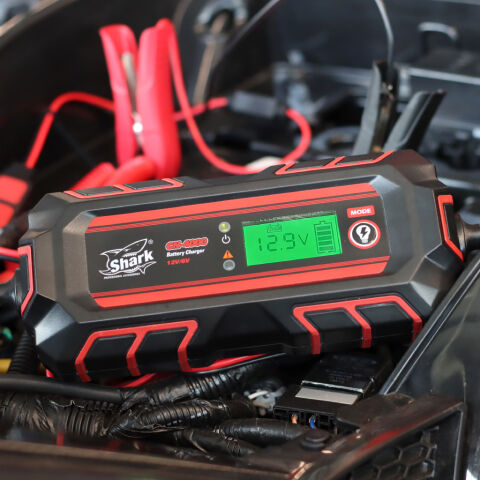
Chargers like SHARK, NOCO keep the battery in optimal condition. You can find them a bit further down.
Recommendation:
- charge every 1–2 weeks,
- or leave the charger in "maintenance" mode or with the "snowflake" symbol
2. Check battery age and condition
Lead-acid batteries in ATVs last an average of 3–4 years. If yours is older, it's very likely already tired – winter just reveals this.
3. Clean and protect contacts
Remove oxidation, clean to bare metal, and apply contact grease. This is a 5-minute job that prevents 50% of winter problems.
4. Take a longer ride at least once a month
15–20 minutes at normal RPMs is the minimum for the alternator to replenish consumed energy.
5. Don't leave the battery discharged
Once it drops below ~12 V, it sulfates faster, permanently reducing its capacity. The first rule of winter maintenance is: keep the battery fully charged.
Therefore, we recommend the following 12V battery chargers:
- STANDARD QUALITY CHARGER - SHARK (NOW ON SALE)
- CHARGER FOR ALL AND ALSO LI-ION BATTERIES - SHARK
Should I replace the battery or can I save it?
Answer three questions:
- Is the battery older than 3–4 years?
- Does starting worsen even after a full charge?
- Does it discharge below 12.4 V overnight?
If the answer is "yes" to two out of three questions, the battery is almost unusable.
Don't waste time trying to save it – replacement is cheaper than relying on an unpredictable start.
Which battery to choose for an ATV?
- MF batteries —good enough, but absolutely needs a charger in winter, shorter lifespan of 3-4 years
- AGM batteries — a good choice for most ATVs, reliable in cold weather
- GEL batteries — more resistant, but can be more expensive and less suitable for high cranking currents.
- Lithium (LiFePO4) — light, powerful, more expensive but understanding their operation in winter is essential (they perform worse at very low temperatures).
e.g. CFMOTO 450 to 1000 and all Segway models - TAB 30L
Conclusion: batteries don't "die" in winter without reason — it just reveals your weak maintenance points
An ATV is a reliable machine, but its battery is a sensitive component. Cold weather merely exposes what is already standard: an old battery, poor contacts, insufficient charging, or inadequate habits.
If you follow the steps above, your ATV will start without a problem, even when it's –10 °C outside.